
Black Belt Candidate
Dahn Bo Nim
3 PHASES
6 month minimum for each phase. No maximum. This is your journey – and it’s time to take charge of it.
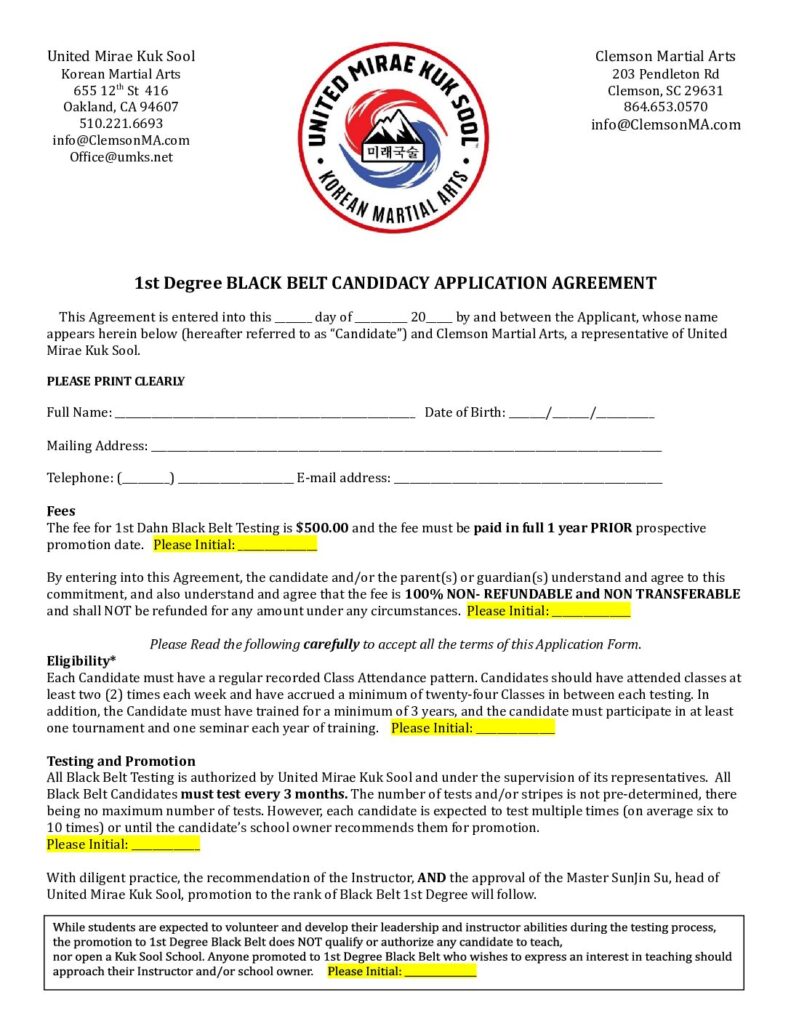
At least 1 year before promotion, candidates must make a $500 payment to the United Mirae Kuk Sool.
(presently some students are still grandfathered in at $400)

Phase 1 – Finish Curriculum
Once you earn DBN, you must start attending the quarterly Black Belt tests that are hosted. Competition at UMKS tournaments are encouraged, but competition and volunteering at KickFEST Tournaments is required! Volunteer hours and additional requirements in documents.
You must finish your chart to complete Phase 1

Phase 2 – Black Belt Fitness
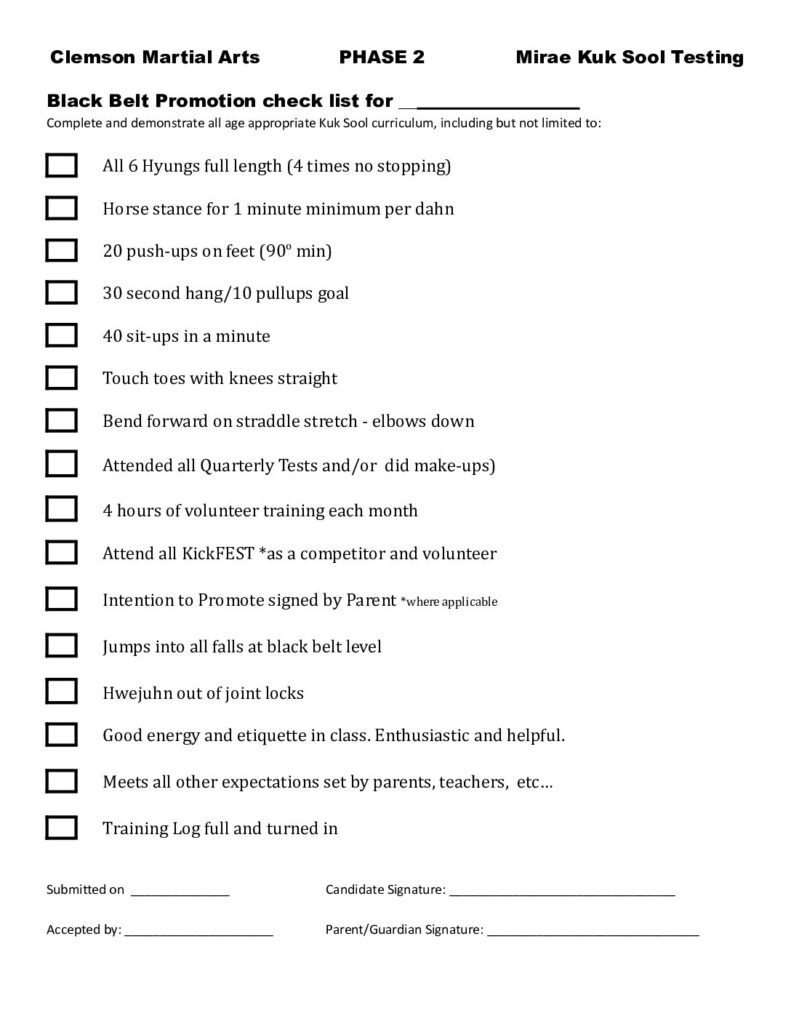
Students must work toward achieving Black Belt fitness and flexibility. Students set physical goals and work on them for at least 6 months. See below for details of minimum physical expectations. This is also a phase that must showcase your exceptional etiquette and leadership.
Students failing to have exceptional ETIQUETTE will NOT be able to move into phase 2.

Phase 3 – Recital Preparation
This is the victory lap of fun and celebration. Enjoy your last few Black Belts tests as the role models who know how to do everything and impress the new kids and judges. This is also the crucible. The final push of hard work – we will do some retreats and special training. We will also be preparing for your promotion. Recital *DETAILS BELOW.
Your Black Belt Journey
There are no endings to your journey, but there is an ending (and a new beginning).
Black Belt promotion happens twice a year.
Spring Family Day – first weekend in May
Holiday Family Day – first weekend in December
Candidates must have gone into PHASE 2 and paid testing fees to United Mirae Kuk Sool at least one year prior to the promotion.
Last steps
- Be informed by instructors that you are promoting.
- Check off all your requirements.
- Plan your demo *see below.
- Get sized (and pay) for a Black Belt uniform.
- Sign up and help plan the promotion party.
- Turn in your essay (and written test 13+ students).
- OPTIONAL – professional photos
- Speak to head instructor if you want to pre-order a sword
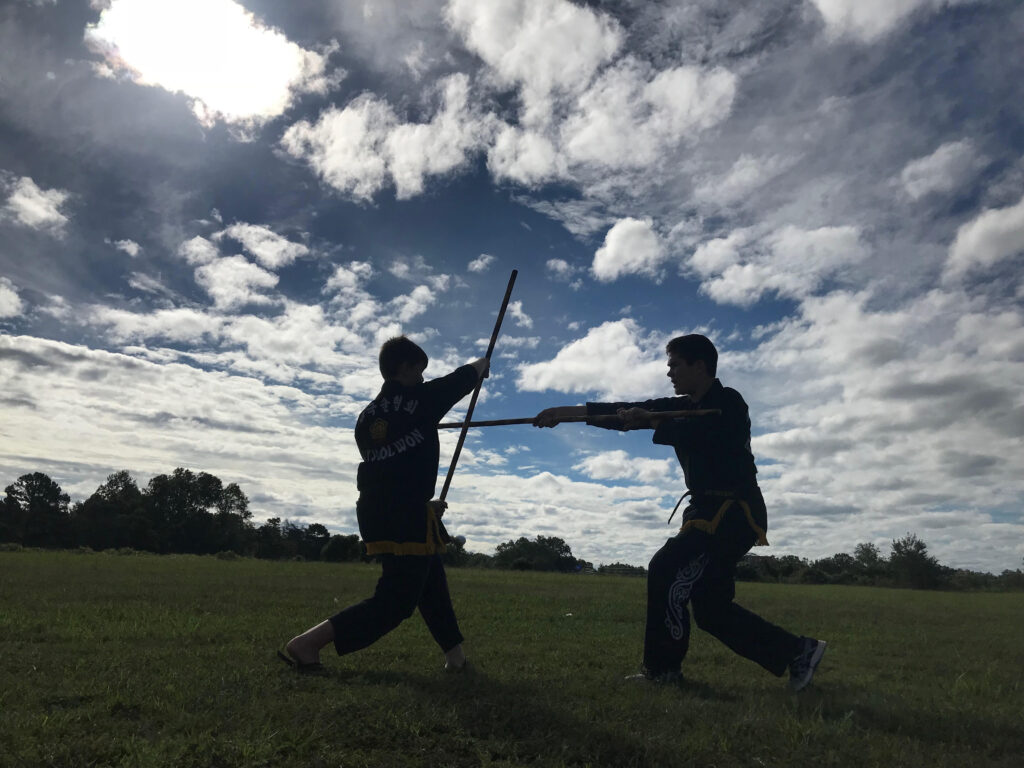
Final Recital Preparation
Group Form with your class – KiChoHyung
Individual Form: Showcase your spectacular skills- pick any form and go be a rockstar!
Self-Defense: Select a partner or 3 and put together exciting fight choreography (including at least 6 techniques from your chart).
Breaking – you need 1-3 holders to help you showcase 3 exciting breaks that you are good at. Please pick things you do well, but also show some difficulty.
Breakdown of future training – with content and paperwork
3 PHASES
Triple check your requirements
LOG YOUR TRAINING!
Fill our home training logs and return at Phase changes
Phase 1
YOU HAVE TO FINISH YOUR CHART
All Material – 1 year before promotion
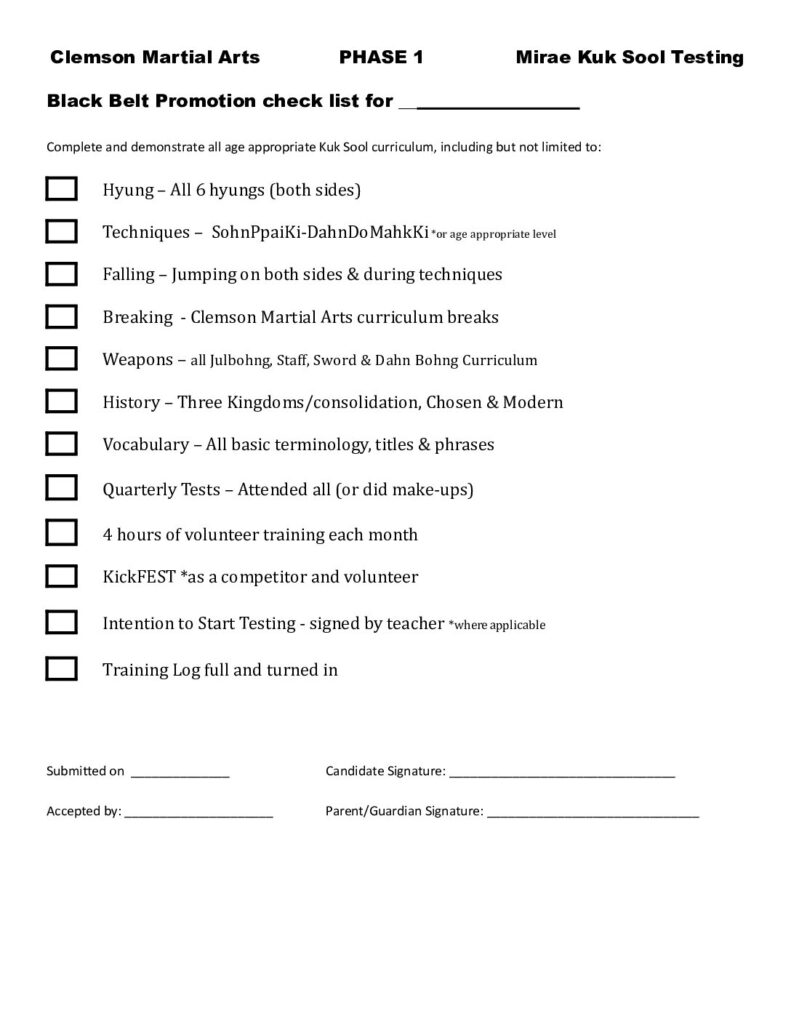
General Requirements
✓
Etiquette and Respect
✓
Falls, kicks and hand strikes, drills, etc
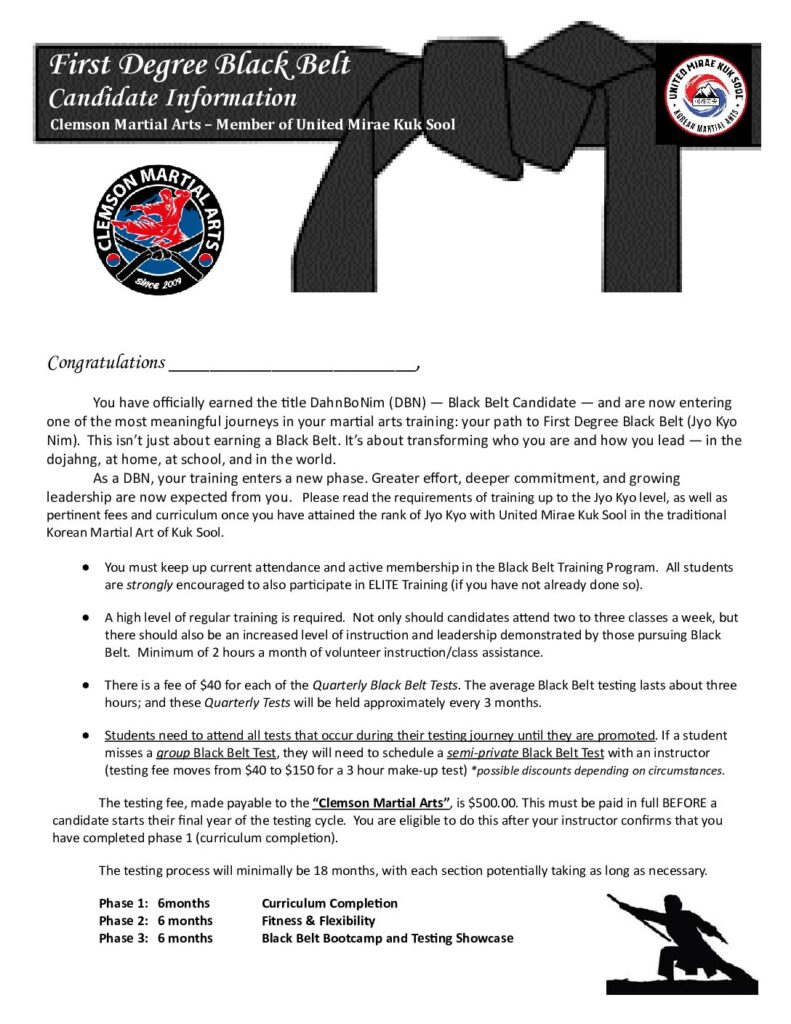
Here is a copy of the invitation letter for your reference.
✓
Forms – both left and right sided
✓
Techniques (age chart differences)
✓
Julbohng, Sword, and Staff
✓
Knowledge of history, language, etc
✓
Volunteer hours (4/month min)
✓
KickFEST and other programs
Log your training
You have to turn this document in prior to being eligible to move to phase 2
Phase 2
Fitness & Flexibility – set some hard goals. Login your progress will make it real!
Payment to HQ
Must go in at least one year prior to promotion.
Phase 3 – UNDER CONSTRUCTION
Getting ready for promotion
Final Push!
End proud of yourself!
✓
Chart is polished
✓
Forms and techniques are exciting/impressive and feel functional.
✓
Attend all tests, workshops, and KickFEST. UMKS tournaments are encouraged, not required.
✓
Get invited to promotion

Pre-promotion Paperwork and costs
Written test and essay
CLEMSON MARTIAL ARTS
Black Belt Journey Essay
Earning a Black Belt is about far more than physical technique. It represents years of effort, growth, setbacks, learning, and perseverance. This essay is your opportunity to reflect on your personal journey in Kuk Sool and what that journey has meant to you—both inside and outside the dojahng.
Requirements: 300–500 words and it’s your personal Black Belt journey in your words.
There is no single “right” way to write this essay. Be honest, thoughtful, and reflective. We are not looking for perfect writing—we are looking for genuine effort and self-reflection.
Suggested Directions
You may choose to write about any of the following, or a combination of them:
- What you have learned about yourself through martial arts
- How Kuk Sool has influenced your daily life outside of class
- Obstacles you have faced and how you worked through them
- What your journey to Black Belt has meant to you personally
Brainstorming Questions
Use these questions to help organize your thoughts. You do not need to answer all of them.
- What do I like most about Kuk Sool?
- How has what I enjoy (or dislike) changed since I started?
- What has been the hardest thing I’ve done in Kuk Sool or in life?
- What challenges or obstacles have slowed my training?
- How did I overcome those challenges?
- What am I still working to improve?
- Has Kuk Sool affected my confidence, focus, or self-control?
- How has my role or responsibility changed since I began training?
- How did I think or feel as a yellow or blue belt?
- How do I think or act now as a recommended Black Belt (DBN)?
- What does leadership, perseverance, or delayed gratification mean to me?
- Why do I believe I deserve my Black Belt?
- What do I admire about Black Belts ahead of me?
- How can I continue growing after earning Black Belt?
“Seek not to imitate the Masters, rather seek what they sought.”
— Old saying
Parent Support: Parents may assist with brainstorming, editing, and typing. Please do not write the essay for your child or put words in their mouth. This reflection should represent the student’s own experience and voice.
Permission & Use: Portions of this essay may be used in future Clemson Martial Arts educational or marketing materials. A student’s identity will be limited to first name only, or a pseudonym if requested.
BLACK BELT WRITTEN TEST
This written test is designed to assess a Black Belt candidate’s understanding of Kuk Sool as a comprehensive martial art, including its history, culture, language, philosophy, and technical progression. Answers should reflect both knowledge and personal understanding, not memorization alone.
Kuk Sool History & Lineage
- Kuk Sool was formally organized in __________ by ____________________________.
(Extra credit: include full legal name.) - Kuk Sool was introduced to the United States in ___________.
- Trace your instructional lineage within Kuk Sool.
My instructor __________________________ learned from __________________________, who learned from __________________________, tracing back to the roots of Kuk Sool. - How would you describe Kuk Sool to someone who has never trained in martial arts?
- Explain how Kuk Sool is similar to and different from other martial arts you are familiar with.
- Why is Kuk Sool often described as a comprehensive martial arts system rather than a single style?
Korean Culture, History & Philosophy
- Kuk Sool draws from three major parts of traditional Korean culture.
____________________________, ____________________________, & ____________________________.
(Extra credit: write these in Korean.) - Write a short overview of Korean history since 1910, focusing on events that influenced Korean culture and martial traditions.
- Pick one of the following and explain how it has influenced martial arts in general and Kuk Sool in particular:
- Confucianism
- Taoism
- Buddhism
- Confucianism
- Explain the symbolism and meaning of the Korean flag (Taegeukgi).
Korean Language & Etiquette
- How many vowels and consonants are there in the Korean alphabet (Hangul)?
There are ______ vowels and ______ consonants.
- Write and label at least five Korean characters you know (example: vowel or consonant, name, sound).
- Why do we bow in Kuk Sool?
How would you respectfully explain bowing to someone who feels uncomfortable because they believe it is religious?
Character, Philosophy & Personal Development
- What qualities, skills, and abilities make someone a good Black Belt?
- Discuss the importance of self-control within Kuk Sool training.
- Give examples of how self-control or other lessons from Kuk Sool have positively impacted your life outside the dojahng.
- What does the idea of delayed gratification mean in martial arts training, and how have you experienced it?
Technical Knowledge & Teaching Understanding
- Write out how you would explain a front fall to a brand-new student.
(Use clear, positive, and age-appropriate language. Prioritize safety.) - Discuss the level of understanding a white belt needs for Ki Bohn Soo, and how that understanding should evolve as a student approaches Black Belt.
How does this affect how you teach techniques at different ranks? - What does the instruction “Feel it” mean to you in Kuk Sool training?
- Describe one area of Kuk Sool that confused you—or a technique you disliked—early in your training that you now understand or appreciate.
- Some people say traditional forms (hyung) are outdated or impractical.
Explain your perspective and defend the value of Kuk Sool hyung training.
Ethics & Responsibility
- Explain the major ideas behind the Student Creed / Student Oath as practiced at Clemson Martial Arts.
Why are these ideas important for a Black Belt?